
Find Gaston Residents by Record
Gaston County does not keep one public list of every household. Instead, each office keeps a record for its own function. The GIS search connects an address to an assessed owner and parcel. The state voter search confirms public registration fields. The Register of Deeds indexes parties to property instruments. The library holds the older city directories that can put a name and address in the same year. Each source answers a narrow question well.
Begin with an exact name or a complete address. Record the date and record type beside each result. A tax mailing address may belong to a company, trustee, or owner living elsewhere. A directory entry may reflect a past household. Those limits make a second, independent record important before treating a name match as the right person.
- Use the county GIS search when an address, parcel number, PIN, owner name, or deed reference is known.
- Check the state voter lookup for a registration record, using name, birth year, county, and status.
- Take a deed book and page or a party name to the Register of Deeds index.
- For an earlier household, select the closest Gaston Library city-directory run and check its town coverage.
- Ask the custodian for a specific existing record when the online index does not reach the needed item.
Gaston Resident Record Offices
The strongest Gaston resident trail is a handoff between offices. The Register of Deeds keeps recorded land instruments and local birth, death, and marriage services. Tax Mapping and GIS translates a street address into a parcel key. Elections maintains local voter-file requests while the state supplies the individual lookup. The Clerk holds court, estate, and special-proceeding files. These are related sources, not copies of one another.
Gaston County Register of Deeds
325 Dr Martin Luther King Jr Way
Gastonia, NC 28052
704-862-7681, land records
Gaston Tax Mapping and GIS
County parcel and tax reference
Address, PIN, owner, deed, and map tools
Tax Office: 704-866-3000
Gaston Board of Elections
410 W Franklin Blvd, Suite 50
Gastonia, NC 28052
704-852-6005
Gaston Clerk of Superior Court
325 Dr MLK Jr Way, Suite 1004
Gastonia, NC 28052
704-852-3100
Note: A request that names the record, time range, person or address, and preferred format is more useful than a broad request for a person’s information.
Gaston GIS Parcel Search
The Gaston GIS Search is the best first stop for a property question. It accepts a primary property address, owner name, Parcel #, PIN, deed book/page, and plat book/page. Its advanced filters also include neighborhood, township or district, construction year, acreage, sales information, property use, and physical characteristics. The result is tax-reference data, not a survey or a title opinion, but it supplies the keys needed for the deed index.
| Gaston GIS field | Use | Why it matters |
|---|---|---|
| Parcel # or PIN | Parcel identifier | Bridges GIS, tax information, and a specific tract. |
| Primary Property Address | Situs search | Finds the physical parcel, even when a mailing address differs. |
| Owner Name | Assessed-owner search | Useful lead, but it is not a complete resident list. |
| Deed or Plat Book/Page | Recorded-reference search | Moves the search to the instrument or subdivision map. |
| Neighborhood and district | Geographic filters | Helps distinguish tax geography from a civic association. |
The county assessor search shows how much address evidence sits in one parcel record. It should lead to a deed, map, or other public source rather than substitute for one.
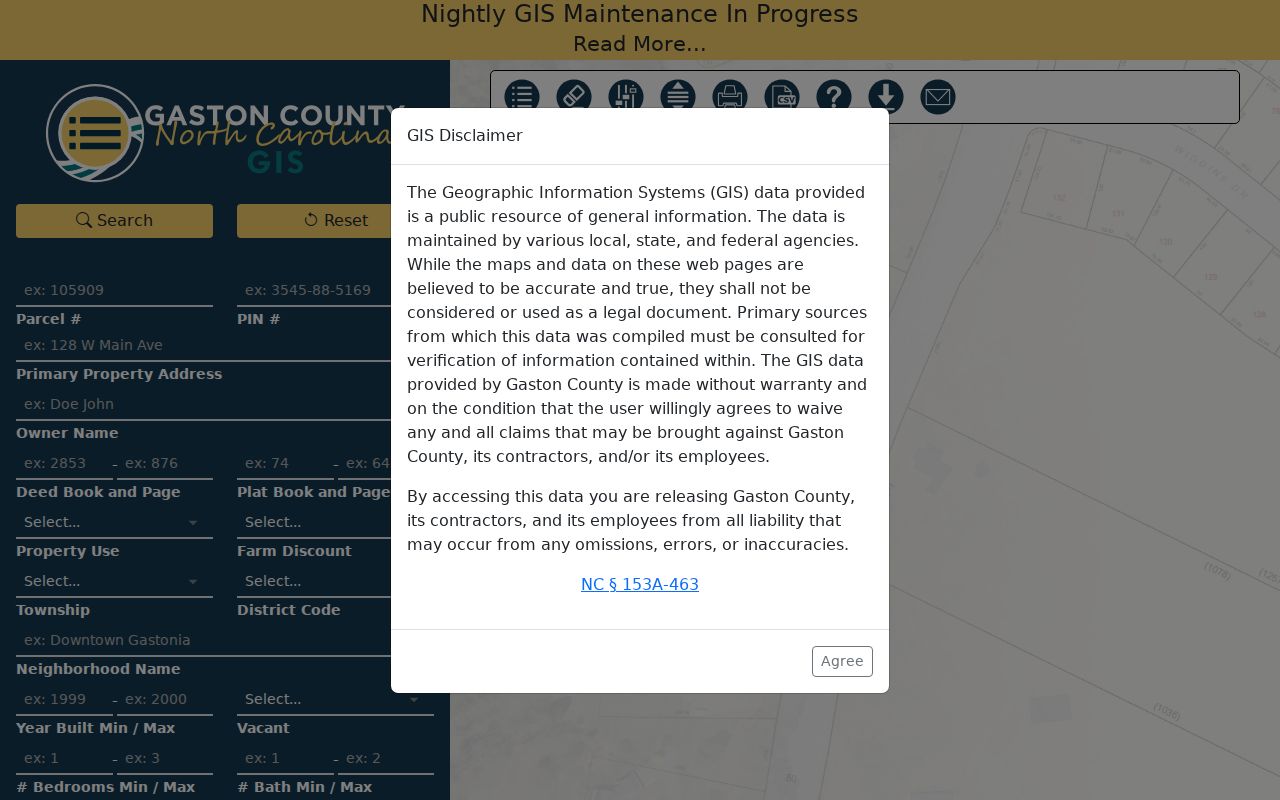
A property result separates the physical situs from the tax mailing address, a difference that prevents many mistaken resident matches.
Gaston Voter Record Boundaries
North Carolina’s Voter Search is name-first. Its form requires first and last name, offers an optional middle initial, and uses year of birth, county, and one or more status choices: Registered, Removed, or Denied. A public result can supply registration status, party, districts, precinct, address, and voter history. History identifies an election and voting method, not a vote choice.
G.S. 163-82.10 makes certain voter fields confidential, including full date of birth, Social Security fragments, email, license data, and protected addresses. The Gaston Board of Elections can process a specific voter-record request, but its form notes weekly handling and possible preparation time. A lawful voter-file request is not a reason to republish a block of neighbors.
Gaston Deed Index Clues
The Register of Deeds index turns a parcel clue into a recorded-document trail. Its Standard search uses Last and Given name fields, Grantor, Grantee, or Either party choices, a date range, Search, and Reset. The advanced search adds firm name, book/page, document number, document type, similar-name options, and Soundex. Deeds, deeds of trust, plats, liens, easements, assignments, and powers of attorney serve different purposes, so the instrument type matters.
Search the cited grantee and grantor, then read the deed reference, legal description, recording date, and prior book/page. The online index is a lead rather than the official record and some older material is not digitized. Land/Real Estate Records at 704-862-7681 is the local fallback for older books or a missing image.
The property-fraud alert linked from the Register of Deeds is a separate notification service. It can monitor up to five names after email confirmation, using an exact last-name match and a first-name-begins-with match. It helps a Gaston recorder notice a newly indexed instrument, but it is not a title search and does not establish that a notice is fraudulent. Check any unexpected letter or charge with the Gaston office before paying for a copy.
- Parcel
- A tax-mapped tract tied to a Parcel # and PIN.
- Index
- A finding tool that points to a record, not always the record image itself.
- Grantor / grantee
- The party transferring an interest and the party receiving it in a recorded instrument.
- Criss-cross directory
- A historical street section that lists householders by address or number.
Note: A deed of trust or lien can name a party without recording a sale, so it should not be read as a transfer of ownership.
Current Gaston Resident Sources
Current sources describe different relationships to Gaston. The property roll identifies an assessed owner and parcel. A voter record documents registration. A deed index identifies parties to a recorded transaction. A court result supplies a role in a case, not residence proof. Where a name needs confirmation, compare two sources that answer different parts of the question. The detailed steps for a one-name trail are on the Gaston resident lookup.
| Gaston source | What it can establish | Custodian | Access route |
|---|---|---|---|
| GIS and tax parcel | Assessed owner, situs, mailing address, PIN, deed reference | Tax Mapping/GIS | Free public search and map |
| Voter registration | Status, districts, public address fields, participation history | State and Elections | Individual search or request |
| Recorded land index | Instrument parties, dates, book/page, legal-description leads | Register of Deeds | Online index and office |
| Court and estate file | Case role, filing, status, disposition, or estate context | Clerk | eCourts and public terminal |
| Business filing | Public entity role or registered office | NC Secretary of State | Interactive official search |
Gaston Court and Vital Trails
Gaston entered the statewide eCourts Portal on October 13, 2025. Smart Search can use case number, party, business, attorney, judicial officer, courtroom, location, case type or status, and filing date. A result can identify case number, parties and roles, case type, filing date, events, hearings, status, disposition, judgment information, and available documents. Restricted, sealed, juvenile, and expunged records remain restricted.
Vital records follow a different route. The Gaston Register of Deeds handles local birth, death, and marriage copy services; the North Carolina Office of Vital Records handles statewide certificates and divorce certificates, while the Clerk keeps a divorce decree. State holdings begin with births in 1913, deaths in 1930, marriages in 1962, and divorces in 1958. Certified copies have relationship and legal-purpose requirements under G.S. 130A-93. Informational and certified copies are not the same product.
For a Gaston court question, use the case number from the Portal when calling or visiting the Clerk. A party hit can identify a plaintiff, defendant, witness, attorney, guardian, or another role, and a charge is not a conviction. For a Gaston vital question, identify the event type and county before ordering. The local Register, the state office, and the Clerk each control different products. Gaston readers looking for an older event may also need a county book, library index, or State Archives source.
Gaston Records and Privacy
North Carolina Public Records Law, Chapter 132, allows inspection and copying of existing public records at reasonable times, subject to record-specific exceptions. G.S. 132-1, 132-6, and 132-6.2 do not require an office to invent a new compilation or disclose confidential material. There is no fixed statewide response deadline, so a focused request that names the office, record type, date range, and desired copy is usually the practical path.
Recorded-document images may be redacted for qualifying identifiers under G.S. 132-1.10(g). The North Carolina Address Confidentiality Program can protect new government records for eligible survivors, and protected voters may withhold their address. A missing field can be an access boundary, not proof that a person moved or never existed.
Gaston records should be used only to answer a lawful, limited question. Keep private identifiers out of notes and share only the minimum detail required to verify the public record.
Gaston Historical Directory Collections
The Gaston County Public Library’s North Carolina Collection at 1555 E Garrison Boulevard holds the county’s strongest historical shelf. Its directory guide lists Piedmont Gastonia volumes from 1910–11 through 1927–28, Hill’s Gastonia volumes in 1934, 1936, 1938, and 1940, later regional runs, and Greater Gastonia R.L. Polk volumes from 1998–99 through 2013. The 1998 title is the first broad county and regional directory, so earlier coverage must be checked town by town.
A printed entry can supply an address, occupation or business, spouse notation, and a mill-village label. It cannot confirm a current resident. The collection’s complete year runs, microfilm notes, and a 1934 sample are described in the Gaston city directories.
The library city-directory guide documents the actual local holdings and the different street, surname, and classified routes within them.
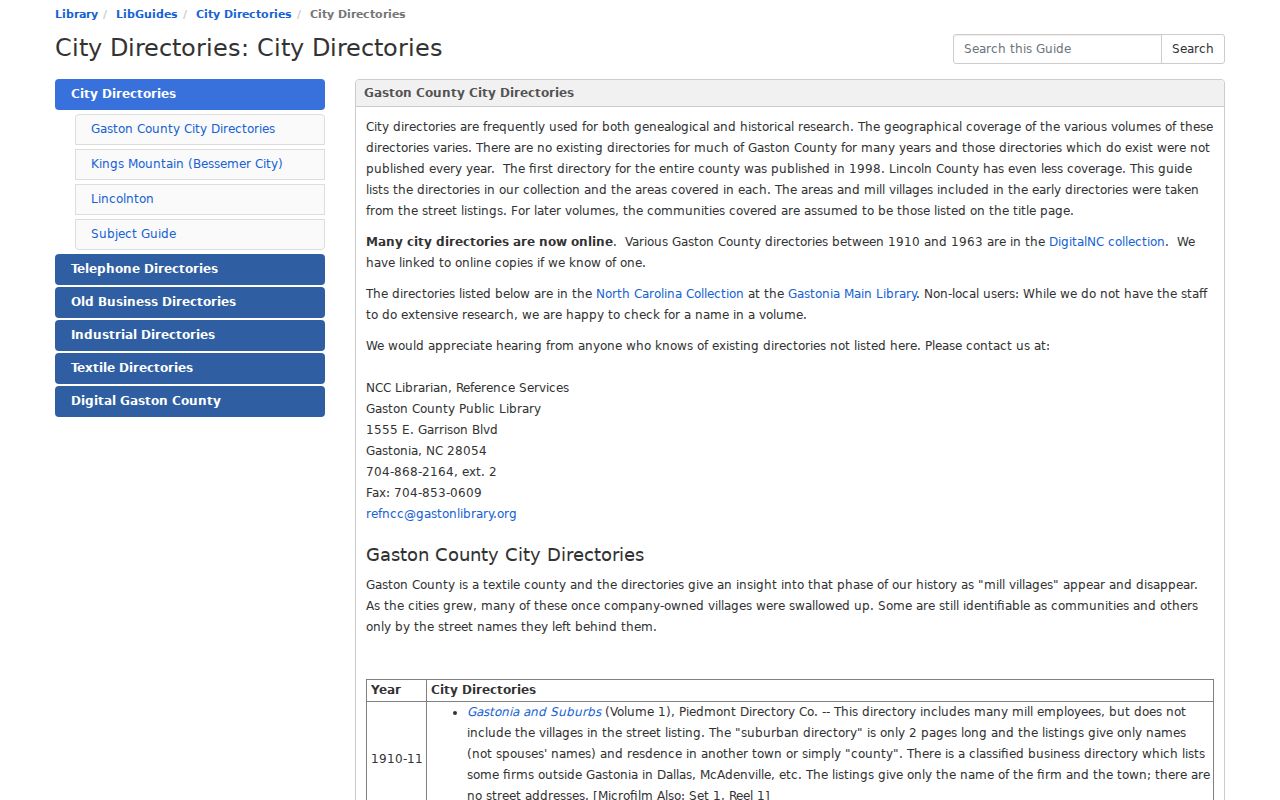
Directory coverage shifts between towns, rural routes, and mill villages, so the printed year and publisher are part of every reliable finding.
Gaston Mill Village Records
Gaston’s early directories are not simply citywide books. They use labels such as Highland, Loray, Holland, Arlington, Flint, Gray, Groves, Osceola, Parkdale, Ruby, Seminole, Winget, and Arkray. In the 1940 guide, Arkray Mills Village numbers are cross-referenced under Arkray, Bond, and Brown. A surname or street that appears absent may need a village label, an older town name, or the next closest directory run.
Gaston County formed from Lincoln County in 1846, and its seat moved from Dallas to Gastonia in 1911. For a pre-county land question, Lincoln records or State Archives material may be the correct starting place. The documented 1874 courthouse fire is another reason to treat a record gap as a research question rather than a conclusion.
Gaston Portal Changes
Two recent Gaston changes affect search habits. eCourts completed its county rollout in 2025, moving present court-index work to the statewide Portal. On May 28, 2026, the Register of Deeds changed land-record vendors and retired the prior system. The county says old-system records are available through the new search, while warning that some older material remains off line. Save book/page references and verify any old bookmark before relying on it.
Gaston GIS also notes routine nightly maintenance, so a short outage can be technical rather than a missing public record. Record the URL and access date along with every Gaston result. When a Gaston search page changes its labels, keep using the record identifiers that travel well: a PIN, parcel number, deed book/page, case number, or library reel. Those identifiers make it possible to move from a Gaston web screen to a person at the custodian’s counter.
Note: A portal rollout changes the route to a record, not the restrictions on sealed files, certified copies, or non-digitized books.
Gaston Public-Safety Record Limits
Public-safety databases are not resident rolls. The Gaston jail portal says its booking search covers the current year and the prior two years. The state Department of Adult Correction search covers state prison, probation, and parole information, not the county jail. The state registry has a separate public-safety purpose. A match or a missing result in any one of these sources does not establish that a person is, or is not, a Gaston resident.
The North Carolina Sex Offender Registry is a state public-safety resource with its own legal notices and map search, not a general people directory.
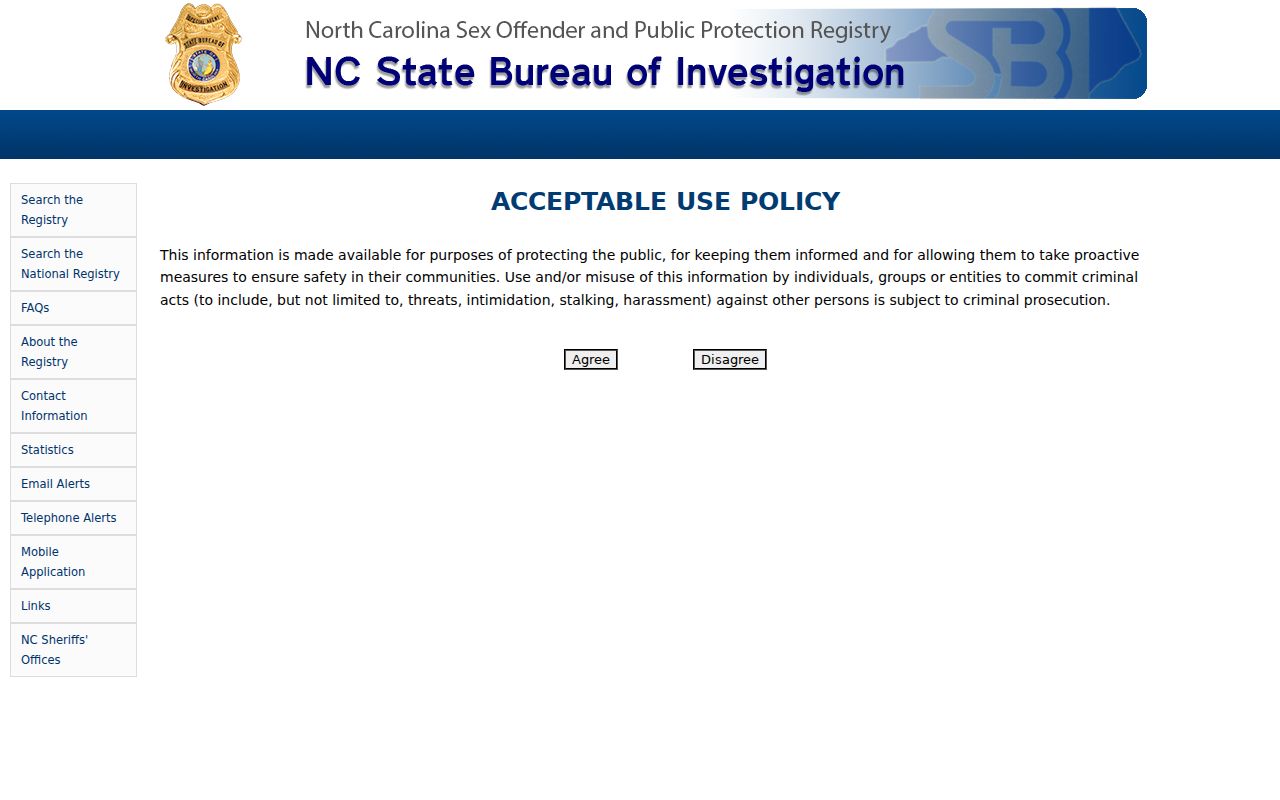
Use the official registry only for its lawful public-safety purpose, preserve its stated limitations, and do not use it to build a private profile of a Gaston household.
For an older arrest, custody, warrant, or report question, identify the event and its probable custodian first. The Sheriff, municipal police, Highway Patrol, Clerk, and state systems can each hold a different record. Ask for an existing report by date, incident number, location, or case number instead of a compiled list of people.
Gaston Requests When Indexes End
When a search stops, move to the office that holds the underlying series. The Register of Deeds can assist with older land books. The Clerk offers public terminals and case-specific copy guidance. Elections accepts a defined voter-record request. The library can direct a researcher to microfilm, yearbooks, the Gaston Gazette Microfilm Index, the Joseph H. Separk index, and local-history guides. The State Archives holds Gaston miscellaneous records from 1847–1910, including naturalization, bonds, inquests, chattel mortgages, child-labor papers, county accounts, and correspondence.
Use the North Carolina Public Records Law for an existing, identifiable local record that is not online. Ask what format is available and what actual reproduction or special-service cost applies before requesting extensive work. A precise question preserves the record’s context and reduces the risk of confusing two people with the same name.
Gaston Library staff may sometimes check a name for a nonlocal researcher, but the collection warns that staff time is limited. Give the likely town, a year, and a collection such as a directory, newspaper reel, or cemetery lead. A Gaston historical question that predates 1846 can require Lincoln County material because Gaston was formed from Lincoln. Record the volume, reel, box, book/page, and date used so a later search can be checked against the same Gaston source.